For the third PolGRG book award, we received 18 incredible nominations that all demonstrate the outstanding and innovative scholarship in the sub-discipline. Narrowing down the list to a longlist of 10 books was not an easy task and deciding the winner even more challenging. The judging panel was especially impressed with the methodological vigour, interdisciplinarity, situated political analysis, and disruption of conventional narratives that arose across all books. Therefore after much careful decision, the judging panel decided to award two winners:
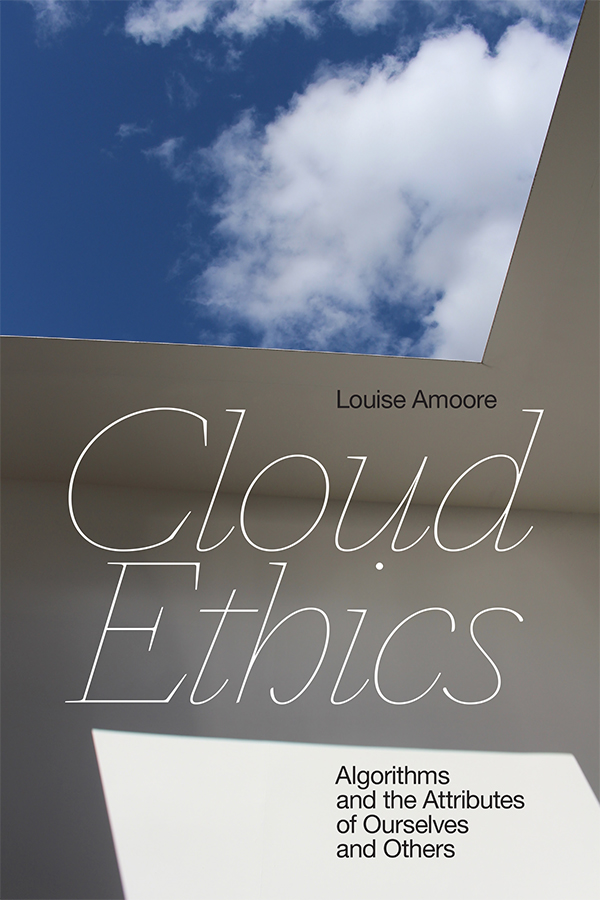
Louise Amoore’s ‘Cloud Ethics: Algorithms and the Attributes of Ourselves and Others’
and
Alessandro Rippa’s ‘Borderland Infrastructures: Trade, Development and Control in Western China’

Huge congratulations to both!
In the words of the panel, Louise Amoore’s book:
‘accomplishes a rare trifecta: she expands the scope of political geographic research to the algorithmic practices and rationalities that shape contemporary political life; she destabilizes conventional celebratory narratives of algorithmic governance by demonstrating how the process of writing, training and governing through algorithms is shot through with ethical moments; and her account of algorithmic governance expands our understanding of core political geographic concepts, such as sovereignty, security and ethics. Cloud Ethics opens several new pathways for political geographic research that will help position the sub-discipline to play a prominent role in future research trajectories within and beyond geography.’
The panel wrote that Alessandro Rippa’s book:
‘is an elegantly written book that offers a compelling account of how China’s colossal infrastructure drive is playing out on the ground in the state’s western regions and, in particular, amongst its ethnic minority communities. The book is timely and innovative, both in terms of its detailed ethnography of China’s Belt and Road Initiative (BRI), and how it foregrounds the experiences of the Uyghur community. The core arguments developed are (1) that this infrastructure is intimately entwined with the Chinese state’s attempts to exert control in these areas, particularly over ethnic minority communities and (2) that the imagined geography underpinning China’s ‘New Silk Road’ ignores pre-existing forms of mobility, exchange, and connectivity. The book thereby makes important contributions to debates on infrastructure within and beyond political geography by presenting infrastructure as technologies of violent control, enclosure, and containment as well as connectivity and mobility.’
Many thanks to all those who made nominations and congratulations to Louise Amoore and Alessandro Rippa who will each receive an award from PolGRG sponsored by the journal Political Geography (published by Elsevier) of £100, and an opportunity to hold an Author meets Critics session at the annual RGS-IBG meeting in 2023, leading to a book award review forum published in Political Geography.
Highly Commended
The panel also identified Katherine Brickell’s book ‘Home SOS: Gender, Violence, and Survival in Crisis Ordinary Cambodia’ and Alan Ingram’s book ‘Geopolitics and the Event: Rethinking Britain’s Iraq War Through Art’ as worthy of a Highly Commended award. The panel noted Katherine Brickell’s book was impressive ‘in its use of rich empirical data’ and ‘detailed exploration of a situated geopolitical context’ to rethink the way political geographers understand violence, lawfare, and the home. While the panel noted Alan Ingram’s book is ‘timely in its focus on the Iraq War from an understudied angle of art’ and how it provides ‘important groundwork for future studies in political geography on the histories and spaces of war and the relationships between geopolitics and art’.
Following on from this announcement, an editorial will be published shortly in the journal Political Geography reflecting on the judging process and what the high quality of submission tells us about the state of the sub-discipline currently.
Congratulations again to the winners!